2019 – 2021 · University
MSc Statistics & Machine Learning
Linköping University ↗ · Linköping, Sweden
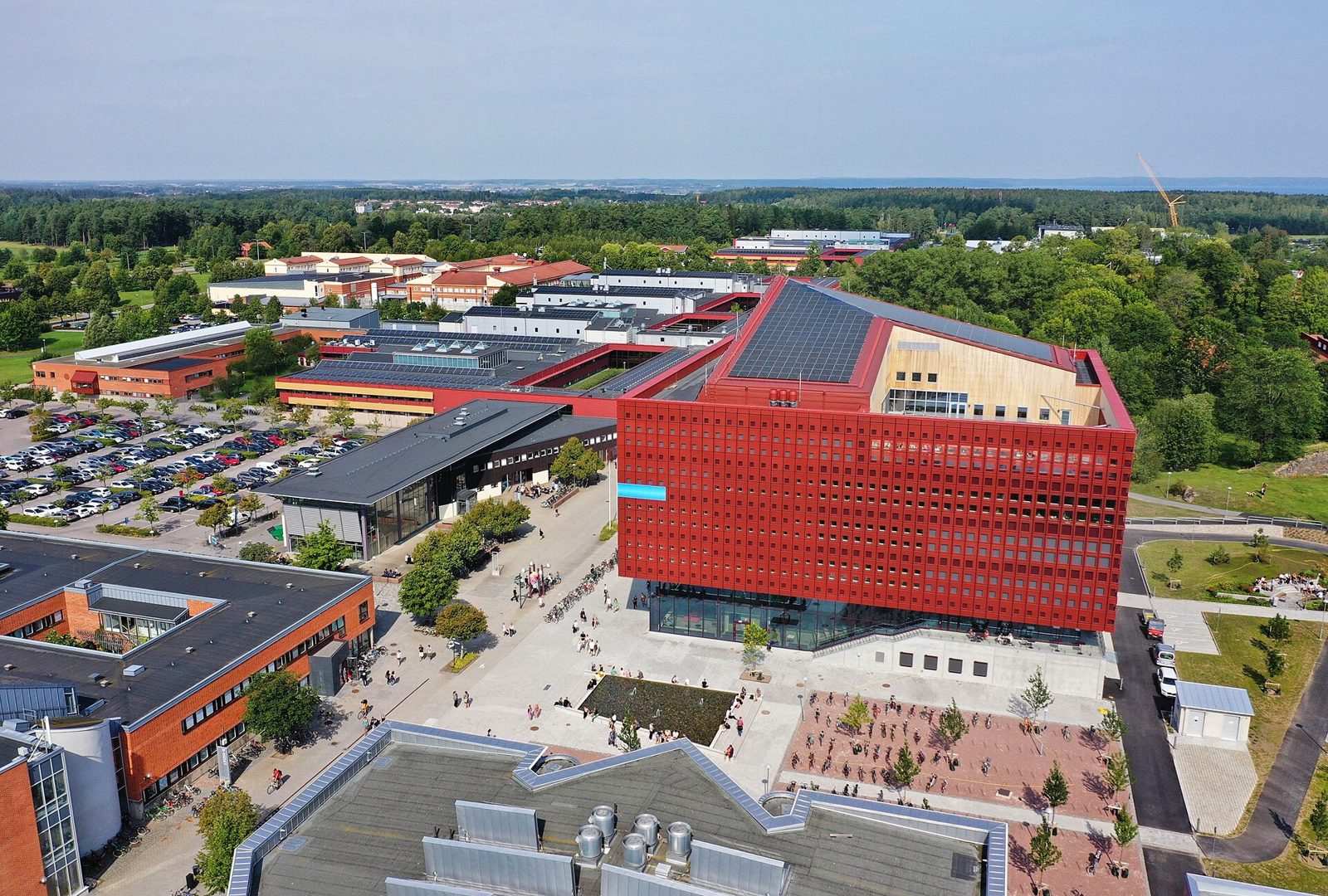
In 2019, after fourteen years in industry, I moved to Sweden to study statistics and machine learning full-time. Two intense years: lots of theory, lots of labs, and a thesis with Ericsson Research at the end.
What it was like
Going back to university in a new country, in a new language, after a long career was a big step. The programme is very hands-on: almost every course had computer labs and reports in R or Python, so you learn by building things, not only by reading.
Coming from geophysics helped more than I thought. Signals, noise, inversion and uncertainty were already familiar ideas. Machine learning gave them new names and much better tools.
My thesis with Ericsson Research
Anomaly detection and causal inference in 5G mobile networks. I did it in spring 2021 with Ericsson AI Research, supervised by Jose M. Peña at Linköping University and Caner Kilinc at Ericsson.
The problem: 5G promises very low latency, the delay between sending a message and getting it through. When the delay suddenly gets high, engineers want two things. They want to catch it, and they want to know why it happened, so they can fix the right thing.
I worked with measurements from an Ericsson test network. First I trained a random forest classifier to flag the high-latency moments. Then, for the "why" part, I used causal Bayesian networks. The PC algorithm learns a graph of which measurements influence which, and from that graph you can estimate how much each one actually causes the latency to change, not just how much it moves together with it.
The classifier could flag a good share of the high-latency cases, and the causal analysis pointed to a small set of network measurements as the main drivers of the delay. The biggest lesson for me was the gap between "correlated with" and "causes". It's easy to say and surprisingly hard to get right with real data.
The data belongs to Ericsson and is confidential, so the published report renames the variables and only describes the data in general terms.
Thesis report
- PDFAnomaly detection and causal inference in 5G mobile networks (PDF)Master's thesis, Linköping University, 2021 (LIU-IDA/STAT-A--21/040--SE). The public university version.
Courses, semester by semester
Autumn 2019
- Statistical methods
- Advanced programming in R
- Machine learning
- Multivariate statistical methods
- Advanced academic studies
Spring 2020
- Computational statistics
- Advanced data mining
- Introduction to Python
- Bayesian learning
- Big data analytics
- Deep learning
Autumn 2020
- Probability theory
- Time series and sequence learning
- Advanced machine learning
- Database technology
- Text mining
Spring 2021
- Master's thesis in statistics (30 credits), with Ericsson Research